Wedding Day Timeline UK: What Time to Start the Ceremony
Almost nobody chooses their ceremony time, they accept the slot they are offered. Why 1pm survives a British winter, and the gap where every wedding day runs late.
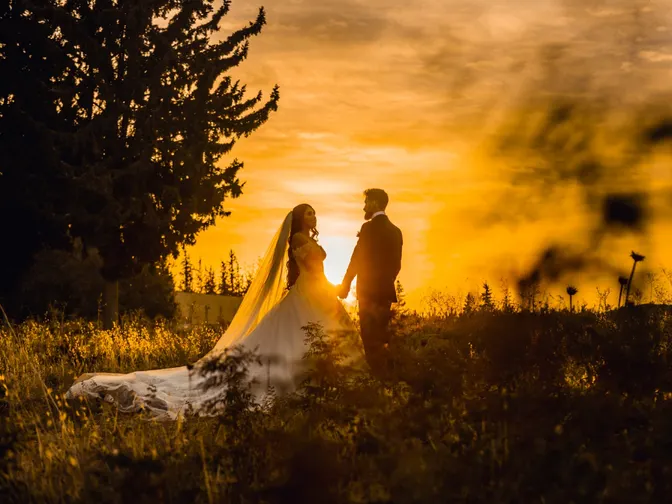
Almost nobody chooses their ceremony time. A venue coordinator offers a slot, it sounds fine, and it goes in the contract. Six months later a photographer gently points out that the sun will have set before the speeches, and that the two hours you left between the ceremony and dinner are actually eighty five minutes once confetti and a group photo of thirty people are involved.
The short version. Most UK weddings start between 12pm and 2pm, and 1pm is the time that works for the widest range of dates and venues. Leave two hours between the ceremony ending and guests sitting down to eat, not the ninety minutes everybody plans. In winter, do not start later than about 1.30pm, because in December the sun is gone by four. Then check the other end of the day before you commit, because the music usually has to stop at 11pm.
What time do most UK weddings start?
Between 12pm and 2pm, with 2pm the single most common slot and 1pm the one photographers tend to argue for. Church weddings sit slightly earlier and are as likely to be in the morning as the afternoon. A register office ceremony is usually an afternoon appointment because that is when the slots exist.
Those are averages, though, and averages are a bad way to pick a time. A 2pm ceremony in June and a 2pm ceremony in December are not the same wedding. One ends its drinks reception in bright evening sun, the other ends it in the dark. So the question worth asking is what time yours has to start for the parts of the day you care about to happen while there is still light and before the bar shuts.
So work backwards from two fixed points you do not control: sunset, and whatever hour your venue's licence makes the music stop.
Your ceremony time is really a daylight decision
This is the bit that catches winter couples, and it is worth being unromantic about. In London the sun goes down a few minutes before four for most of December. In Manchester the earliest sunset of 2026 is 3.51pm on 13 December. In Edinburgh it is 3.40pm on the 14th. Move north and you lose more light again, which is why a Highlands wedding in January is a genuinely different scheduling problem from a Cornwall wedding in January.
Run the sums for a 2pm December ceremony. You are out of the room by 2.25, confetti and hellos take you to 2.45, and you have perhaps forty five minutes of usable daylight left for every outdoor photograph of the entire day. Group shots alone eat twenty five minutes of that. Nothing has gone wrong in this version, and you have still lost the couple portraits.
A 12pm or 12.30pm ceremony in the same month gives you the whole afternoon and lets golden hour land during the drinks reception rather than after dinner. That is the trade winter couples make: an earlier start, an earlier meal, and a longer evening indoors. It works well. It just needs deciding in advance rather than discovered in November.
Summer removes the problem entirely. London's latest sunset in 2026 is 9.24pm on 25 June, and the longest day carries sixteen and a half hours of daylight, so a 2pm or even 3pm ceremony still leaves you portraits at eight in the evening when the light is at its best and everyone has relaxed. If you are marrying between May and August, take the later slot and use it.
How long does the ceremony itself take?
Less time than you think, and it starts earlier than the invitation says. A civil ceremony is about twenty to thirty minutes of actual ceremony, and a short statutory one at a register office can be under fifteen. A Church of England service usually runs thirty to forty five minutes, and longer if you are having communion, which can push it towards an hour and a half.
The part that never appears on a running order is the legal interview. A registrar will normally arrive at an approved premises about thirty minutes before the stated start time and will see each of you separately to check your details against the notice you gave. You need to be there, dressed, findable and not halfway through a photograph. Guests should be seated fifteen to twenty minutes before the ceremony time, and the ushers and best man want to be there earlier than that.
All of which is an argument for putting an arrival time on the invitation rather than the ceremony time. Print 1pm when the ceremony is at 1pm and somebody will be parking at 1pm. Our guide to wedding invitation wording covers how to phrase that without sounding like an airline. And if the legal side is still ahead of you, the appointment behind all this is giving notice of marriage, which has its own 29 day clock.

How long between the ceremony and the wedding breakfast?
Two hours. Almost everyone plans ninety minutes, and ninety minutes is where wedding days start running late.
Here is the arithmetic, using the timings photographers actually work to. Confetti takes ten minutes. Getting a drink into everyone takes twenty. Ten to fifteen group photographs take twenty to twenty five minutes, assuming somebody who knows the family is fetching people, and the single big photograph of everybody takes another five. Couple portraits are ten minutes in the afternoon, fifteen at golden hour. Then moving guests from a lawn into a dining room takes fifteen minutes, or up to thirty at a big wedding, and longer again if you are having a receiving line.
Add it up and you are at about eighty five minutes with nothing going wrong at all. No missing uncle, no rain delay, no queue at the one accessible loo. Ninety minutes leaves you five minutes of slack for an entire afternoon. Two hours gives you room to be twenty minutes behind and still sit down on time.
The counterweight is that guests get restless past the two hour mark, especially standing up, especially sober. If your gap has to be longer than that because of a registrar slot or a travel leg between two sites, feed people. Canapés, an ice cream van, a table of crisps by the bar, it genuinely does not matter which, as long as there is something.
A 1pm ceremony, hour by hour
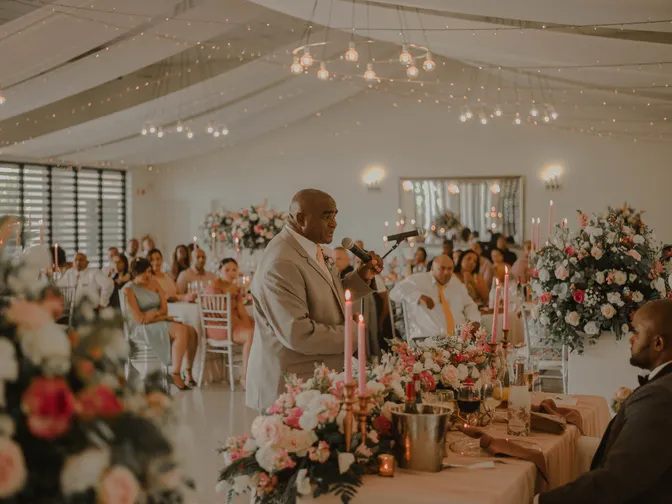
One worked example is worth more than a template. This is a summer wedding at a single venue, around a hundred guests, ceremony at 1pm.
- 8.30am hair and makeup starts. Whoever is in the dress goes last.
- 11.45am dressed. Aim to be ready an hour before you have to be anywhere, because this is the hour that always overruns.
- 12.30pm registrars arrive and take you both aside for the interview. Guests start arriving.
- 12.45pm guests seated.
- 1pm ceremony.
- 1.25pm out, confetti, then everybody wants to hug you and it takes fifteen minutes to get across a lawn.
- 1.45pm drinks reception and group photographs together. Have the list written down and give it to somebody bossy.
- 2.45pm couple portraits.
- 3pm guests called through and seated.
- 3.15pm wedding breakfast. Ninety minutes for three courses, two hours if the venue is doing anything theatrical.
- 4.45pm speeches. Ten to fifteen minutes each, thirty to forty minutes for the lot.
- 5.30pm room turnaround. Fifteen minutes to flip a room, longer if the tables move, and this is the natural moment for a walk outside.
- 7pm evening guests arrive.
- 7.30pm cake and first dance, roughly half an hour after the evening guests land.
- 11pm music off.
- 11.30pm carriages.
Two things about that list are opinions rather than rules. Speeches after the meal is the British default, but doing them before the food means your best man eats something and everyone who is nervous stops being nervous by two o'clock. And the flat hour between the speeches ending and the evening guests arriving looks like dead time on paper. It is the only part of the day most couples say they would protect if they did it again.
What time does the evening reception start?
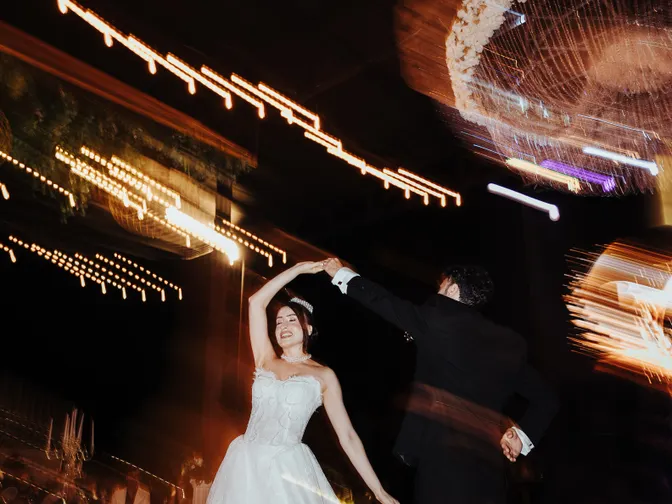
Evening guests arrive between 7pm and 7.30pm, and the cake cutting and first dance follow around half an hour later. There is a reason for that half hour rather than an hour: you want the dance to happen while the room is at its fullest, before the day guests start peeling off to find a chair.
The end of the night is not up to you, and it is worth knowing why. Under the Licensing Act 2003, as amended by the Live Music Act 2012 and extended to recorded music in April 2015, live and recorded music at an alcohol licensed venue is not a licensable activity at all if it happens between 8am and 11pm with an audience of 500 or fewer. That exemption is why so many British weddings stop dead at eleven. After 11pm the venue needs its premises licence to permit it, and plenty of rural venues have licences that do not, or that allow late music indoors but not outside.
Some venues include a late licence to 1am in the package and some charge a few hundred pounds for it. Ask three separate questions when you view, because venues answer them as if they were one: what time must amplified music stop, what time must the bar close, and what time must guests be off the site. Our venue viewing checklist has the rest of the awkward ones.
Can you get married in the evening in England and Wales?
Legally, yes, and this surprises people. Marriages in England and Wales used to have to take place between 8am and 6pm under section 4 of the Marriage Act 1949. Section 114 of the Protection of Freedoms Act 2012 repealed it, with effect from 1 October 2012, bringing England and Wales into line with Scotland and Northern Ireland. There is no legal reason you cannot marry at nine in the evening.
In practice you will struggle. Nothing in that repeal obliges a council to staff a 9pm ceremony or a religious body to hold one, and most registration services still publish daytime slots only, with approved premises licensed for a set window. Sunset weddings at British venues are usually late afternoon ceremonies with good marketing.
Worth remembering too that registrar attendance fees are set by each council and priced by day and time, so the popular slots cost more. Saturday afternoon is the priciest slot almost everywhere, and moving to a Friday or a weekday morning can save a couple of hundred pounds on the registrar alone, before you have negotiated anything with the venue.
Three things to check before you sign anything
Ring the registration service before you commit to a date and a time, not after. In most counties the registrar's diary fills before the venue's does for summer Saturdays, and the registrar is the half of the booking that cannot be swapped for a similar one. Ask what times they can attend that venue and what each costs.
Then look up the sunset for your actual date rather than for the season, because mid September and late October are two different weddings. And get the music curfew in writing before the deposit, since it decides how long the second half of your day is.
After that, the running order changes every time a supplier confirms something, and the version in your head is never the version the florist has. Keeping the schedule and the supplier deadlines somewhere you can both see is most of what our free wedding planner is for. Our 12-month planning timeline handles the months before; this is the one day at the end of it.
Write the final version on one page, with a phone number against every name on it, and give it to two people who are not either of you. Then you can spend the day without knowing what time it is. You can set up a planner in a couple of minutes and start with the three times you have just checked.
Timing questions couples ask us
What time should a wedding ceremony start?
Most UK weddings start between 12pm and 2pm, and 1pm suits the widest range of dates and venues. Work backwards from two fixed points rather than picking a time in the abstract: sunset on your actual date, and the hour your venue's licence makes the music stop. Between May and August a 2pm or 3pm ceremony still leaves plenty of evening light.
How long should you leave between the ceremony and the wedding breakfast?
Two hours, although most couples plan ninety minutes. Confetti takes about ten minutes, drinks twenty, group photographs twenty to twenty five, the big group shot five, couple portraits ten to fifteen, and seating guests fifteen to thirty. That is roughly eighty five minutes with nothing going wrong, so ninety minutes leaves almost no slack. If the gap has to run past two hours, provide canapés or another snack.
How long does a wedding ceremony take?
A civil ceremony is usually twenty to thirty minutes, and a short statutory ceremony at a register office can be under fifteen. A Church of England service normally runs thirty to forty five minutes, and up to about ninety with communion. Add the legal interview on top: the registrar generally arrives at an approved premises around thirty minutes before the stated start time to see each of you separately.
What time should a winter wedding ceremony start?
No later than about 1.30pm, and 12pm to 12.30pm is safer. In December the sun sets a few minutes before four in London, at 3.51pm in Manchester and 3.40pm in Edinburgh, so a 2pm ceremony leaves roughly forty five minutes of usable daylight for every outdoor photograph of the day. An earlier ceremony puts golden hour inside the drinks reception instead of after dinner.
What time do evening wedding guests arrive?
Between 7pm and 7.30pm at most UK weddings, with the cake cutting and first dance about half an hour later so the room is at its fullest. Invite evening guests at least half an hour after the wedding breakfast ends, which gives the venue time to turn the room around.
Why does wedding music have to stop at 11pm?
Because of how licensing works. Under the Licensing Act 2003, as amended by the Live Music Act 2012 and extended to recorded music in April 2015, live and recorded music at an alcohol licensed venue is not a licensable activity between 8am and 11pm for an audience of 500 or fewer. Past 11pm the venue's own premises licence has to permit it. Some venues include a late licence to 1am, others charge extra, and some rural licences allow late music indoors only.
Can you get married in the evening in England and Wales?
Legally yes. The rule that marriages had to take place between 8am and 6pm, in section 4 of the Marriage Act 1949, was repealed by section 114 of the Protection of Freedoms Act 2012 with effect from 1 October 2012. In practice it is hard to arrange, because nothing obliges a council to staff an evening ceremony and most registration services publish daytime slots only.
Start your plan, free
Add your date and watch the countdown begin. The checklist, budget and guest list are waiting.
Create your free accountPhoto by Eyyüp Gürel via Pexels. Additional images via Pexels.
← Back to The Planning Notes