How Much Money to Give as a Wedding Gift (UK)
The group chat wants a number. The honest range for a UK wedding, why covering the cost of your seat is an American import, and how to give less without guilt.
The question always arrives in a group chat, usually late at night, usually from whoever has the wedding in their diary first. What are we all putting in? Nobody wants to be the one who gave forty pounds when everybody else gave a hundred. Nobody particularly wants to give two hundred either, having already bought a hotel room and an outfit they will wear once.
So here is the answer before the reasoning. For a UK wedding, fifty to a hundred pounds per person is the ordinary range for a day guest. Twenty to fifty is right for an evening invitation. A hundred and fifty or more suits a sibling, a best friend, or a wedding you are standing up in. A couple attending together normally gives one gift between them rather than doubling up. And no matter what the internet tells you, no one is running a spreadsheet on the door.
What is the actual average in the UK?
Genuinely nobody knows, and you should be suspicious of anyone who sounds certain. Prezola, which runs gift lists, puts the average cash gift at around £102, up from £79 in 2020. Other surveys have landed nearer £65. Most published guides settle somewhere between £50 and £100. The figures move around because the people collecting them are mostly companies that sell wedding gifts, and because the honest answer, "it depends enormously on who is asking and what they earn", makes for a poor headline.
What the numbers do agree on is the direction of travel. Cash has overtaken the toaster, and cash gifts have climbed faster than physical ones since 2020. If you give £50 you are within the normal range. If you give £100 you are being generous. If you give £150 you are almost certainly one of the most generous people in the room, and the couple will notice, quietly, and remember.
Do you have to cover the cost of your seat?

No. This rule, "cover your plate", is an American import that has drifted into British group chats and it deserves to be sent home. The idea is that your gift should roughly match what the couple spent feeding you. Run the arithmetic on a UK wedding in 2026 and you can see how absurd it gets: Hitched puts the average spend per guest at £272 and Bridebook at around £278. Nobody is handing over £270 in a card, and no couple in Britain is expecting it.
It is also a rule that punishes exactly the wrong people. It asks the guests of couples with money to give the most, and it turns an invitation into an invoice. The couple chose the venue, the menu and the guest list. Those are their decisions and their costs. Your job is to turn up, be good company, and give what you can comfortably afford.
What to give, depending on who they are
Treat these as starting points rather than tariffs. Adjust for your own finances first and your closeness to the couple second, in that order.
- Colleague, or a friend you see twice a year: £30 to £50.
- Good friend, cousin, the usual run of relatives: £50 to £100.
- Close friend, sibling, or you are in the wedding party: £100 to £200, and less if the hen or stag has already cleaned you out.
- Parents and grandparents: whatever feels right, and often something other than money entirely.
- Attending as a couple: one gift between you. Two people do not owe two gifts.
- Evening only: £20 to £50, or a bottle of something and a card that is actually written in.
- Students, anyone between jobs, anyone stretched: a card. Truly. Read on.
What if you were only invited to the evening?

The evening invitation is a very British institution and it comes with a lighter obligation, which is only fair. You are getting a slice of the day rather than the whole thing. Twenty to fifty pounds is normal, a bottle of decent fizz is a perfectly good alternative, and plenty of evening guests give a card and nothing else without anybody minding.
If being invited to the evening only has stung a bit, that is worth naming rather than expressing through the gift. Most couples building an evening list are wrestling with a venue capacity and a budget, not ranking their friendships. It is the least enjoyable afternoon of the whole process, as anyone who has ever built a wedding guest list will tell you.
Is it rude to give cash at a wedding?
It used to be considered a bit blunt. It is now the most common wedding gift in Britain, and most couples in their thirties, with a flat full of kitchen equipment and a mortgage that would like some attention, would rather have it. Give money and you are not being lazy. You are being useful.
How you hand it over matters more than people think. A few notes:
- Cash in a card is still the default, and it is worth putting your name inside the card as well as on the envelope. Envelopes and cards get separated on the night more often than anyone admits.
- Bank transfer is quietly the safest option, and increasingly the one couples prefer. Send it the week before with a short message rather than on the day, when they will not be looking at their phone.
- Cheques still work, but write it to one named person rather than "Mr and Mrs" anything. Names change slowly and banks are unhelpful about it.
- Cash funds and honeymoon funds are easy and traceable, which is what most couples want. Check the total at the checkout: some sites add a small handling fee on top of what you pledge.
What if the wedding has already cost you a fortune?
Then give less, and give it without apology. Attending a UK wedding properly can run to several hundred pounds once you add travel, a night or two in a hotel, an outfit and something to drink at the bar. Add a hen or stag weekend and a wedding can quietly become the most expensive entry in your year.
The gift is the one part of that total which is entirely yours to set, so set it honestly. A group gift is the neatest solution when a few of you are in the same position: five people at thirty pounds each is a £150 gift, which looks handsome on a gift list and hurts nobody. Failing that, a card with something specific and warm written in it is a real gift. Couples keep those. They do not keep a list of who gave what, except for the thank-you notes, and even then it is the note they remember writing rather than the number.
Do you send a gift if you are not going?
You are not obliged to, whatever you read elsewhere. The old etiquette is clear that an invitation is not a bill and a decline settles the matter. What you should always send is a card, because the thing that actually stings when a friend cannot come is the silence, not the absence of a present.
That said, if it is a sibling, a close friend, or anyone whose wedding you would have crossed a country for, send something. Around half of what you would have given if you had gone is a comfortable landing spot, and the moment to send it is when you RSVP no, or any time in the couple of months after the wedding. There is no deadline anybody is enforcing.
When do you actually give it?
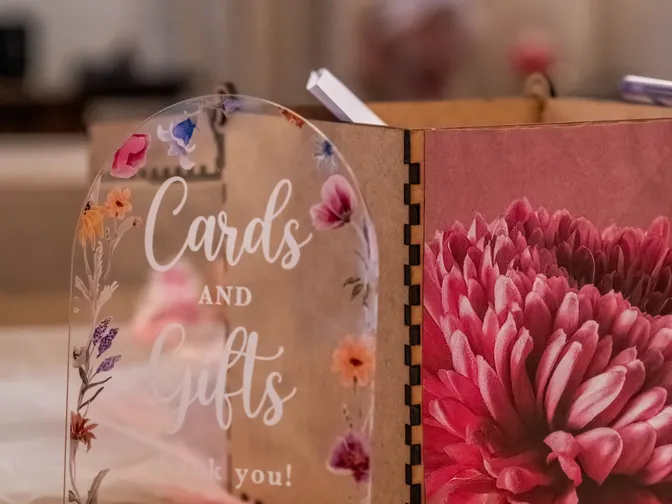
Traditionally, gifts were sent to the couple's home before the wedding, which is still the most useful thing you can do with anything larger than an envelope. On the day there will usually be a card box or a table near the entrance, and that is where cards and small gifts go. A boxed stand mixer carried into a barn at four in the afternoon is a lovely gesture and a genuine logistical problem, since somebody, usually the best man, has to get it into a car at midnight.
If the couple have a gift list, use it. It exists precisely so that nobody has to guess, and going off-list to prove a point about originality is how households end up with three cheese boards.
If you are the couple: how to ask without being awkward
Never put an amount on anything. That is the only hard rule, and breaking it is the fastest way to make guests feel invoiced. Beyond that, say plainly what would help. Something like "your company on the day is the only gift we want, but if you would like to give something, we are saving for a honeymoon" does the job, sits on your wedding website rather than in the invitation, and gives everyone an easy out.
Then decide together how the money fits into the plan before it starts arriving, because gift money that lands in a current account has a way of evaporating. Keep it alongside your real numbers in one place, which is exactly what the budget tracker in our free wedding planner is for. It sits beside the same tracker you would use for family contributions, and the etiquette of those is a separate conversation we have written about in who pays for what.
Keep a list, then write the notes
Whichever side of this you are on, the part that matters comes afterwards. Write down who gave what as it arrives, not in a heap three weeks later when the envelopes have merged into one, and get the thank-you notes out inside a couple of months. People forget the amount. They remember whether they were thanked. Keeping the list somewhere both of you can open on a phone is the whole job our planner does, and setting it up takes a couple of minutes alongside the rest of your planning timeline.
Wedding gift questions guests actually ask
How much money should you give as a wedding gift in the UK?
Fifty to a hundred pounds per person is the ordinary range for a day guest at a UK wedding. Twenty to fifty pounds suits an evening invitation, and a hundred and fifty or more is common for a sibling, a close friend, or anyone in the wedding party. Published averages sit between roughly £65 and £102, which tells you how wide the normal range really is. Give what you can comfortably afford.
Is £50 enough for a wedding gift?
Yes. Fifty pounds sits squarely inside the normal UK range for a day guest and is generous for an evening one. It is also well above what most couples expect from friends who have already paid for travel, a hotel and an outfit to be there. No couple worth attending is grading the envelopes.
Do you give a wedding gift as a couple or per person?
One gift between the two of you. Couples attending together are not expected to give double, so a joint gift of £100 to £150 is a normal and generous contribution from two people. The same applies to a family attending with children.
Do you have to cover the cost of your plate at a wedding?
No, and the rule is an American import rather than British etiquette. The average UK wedding in 2026 cost roughly £272 to £278 per guest according to Hitched and Bridebook, and no couple expects a gift on that scale. What a couple chooses to spend on hosting is their decision, not a bill passed to their guests.
Should you send a wedding gift if you cannot attend?
There is no obligation to. Declining an invitation settles the matter, and a warm card is what really counts. If the couple are close to you, sending something is a kind gesture, and around half of what you would have given had you attended is a comfortable amount. Send it when you RSVP, or any time in the couple of months after the wedding.
How much should an evening guest give at a wedding?
Twenty to fifty pounds, or a bottle of something nice with a card. An evening invitation is a smaller share of the day and carries a lighter obligation, and many evening guests give a card alone without anybody thinking twice about it.
Is it rude to give cash instead of a wedding present?
Not any more. Cash is now the most common wedding gift in the UK, and most couples prefer it to another set of glassware. Put it in a card with your name written inside as well as on the envelope, or send a bank transfer the week before so it does not go astray on the day.
Start your plan, free
Add your date and watch the countdown begin. The checklist, budget and guest list are waiting.
Create your free accountPhoto by Cameron Basson via Pexels. Additional images via Pexels.
← Back to The Planning Notes